
Why Expensive Perfumes Feel Different: The Science of Quality, Materials, and Perception

Luxury or niche perfumes are crafted with a different ethos than everyday designer or mass-market scents. They often use rarer, higher-grade ingredients and unconventional blends, while mainstream fragrances prioritize broad appeal and cost efficiency. In practice, this means a brand like Parfums de Marly or Byredo (both available on FridayCharm) produces scents in small batches with exotic oils, whereas mass-market brands use more synthetic fillers. As one fragrance source notes, niche perfumes “use superior quality, rare, precious” materials, while many mass-market perfumes must “use more mundane ingredients to contain costs”. Put simply, a perfume’s price often reflects its artistry, ingredients and exclusivity rather than merely a big-name label.
What sets luxury scents apart:
-
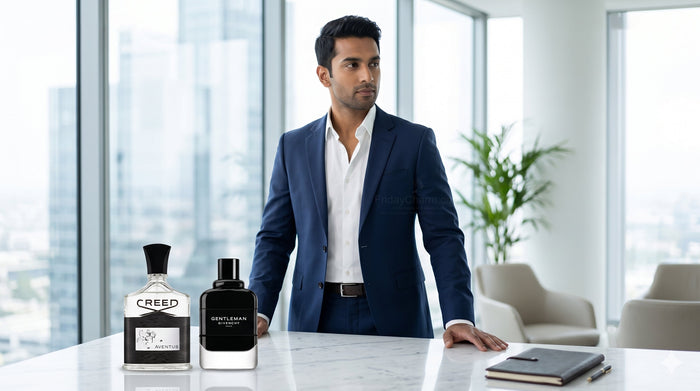
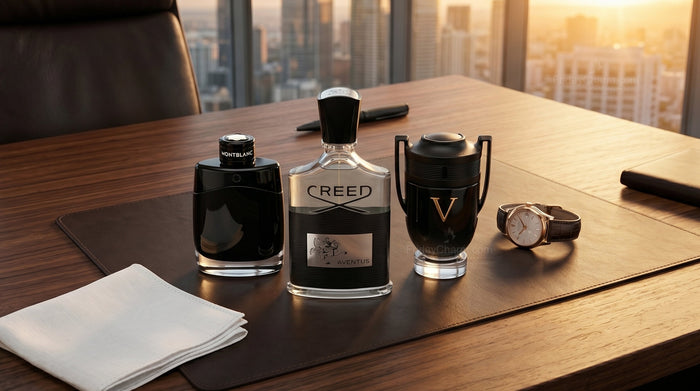
Artisanal creation – Many are formulated by master perfumers and released in limited runs. For example, Creed Aventus (100 ml) – a popular high-end masculine scent – is sold on FridayCharm at about ₹37,450, reflecting its status and craftsmanship.
-
Unique style – Luxury lines experiment more, blending unusual notes or cultural influences. By contrast, a typical designer cologne focuses on tried-and-true accords.
-
Exclusivity – Premium perfumes often have distinctive bottles and limited availability (e.g. Tom Ford’s Private Blend or Clive Christian editions), which can make them feel special. This scarcity and “brand prestige” itself can signal quality to our brains.
However, expensive does not automatically mean better. Even a high-priced bottle can be disappointing if the composition is poor
. The key is whether those higher costs translate into richer materials and deeper performance, rather than just fancy packaging or marketing.
Quality of Ingredients: Natural vs. Synthetic
One reason expensive perfumes can feel richer is what’s inside the bottle. Top-tier fragrances often rely on rare natural extracts and absolutes that are costly to produce. For example, true jasmine and rose absolutes require huge numbers of flowers: up to 2,000 lbs of jasmine or 10,000 lbs of rose petals to yield just 1 lb of oil. As Byrdie notes, these processes are labor-intensive and time-consuming, which drives the price up sharply. Similarly, ingredients like oud (“liquid gold”) and ambergris are exceptionally rare and were once worth more than gold per kilo.
-
Rare naturals: Most luxury scents include some genuine naturals. For instance, Creed Aventus lists base notes of oakmoss and even ambergris on its label
-
– ingredients that are costly and exotic. By contrast, a budget fragrance would approximate those same notes with cheap synthetic musks or ambery chemicals.
-
High-quality synthetics: When expensive perfumes use synthetics, they tend to choose cutting-edge molecules that smell more nuanced and skin-friendly. Developing a new synthetic aroma is itself costly (often €150,000 or more just to register a new raw material). Top-tier brands (e.g. supplied by Givaudan, Firmenich) pay big for refined aromachemicals that ensure consistency and depth.
In short, the very materials in a luxury perfume are often more resource-intensive. As Byrdie summarizes: “The finest—and most expensive—perfumes are made of absolute oils from flowers… If you see a very inexpensive perfume claiming a rare ingredient, it’s likely a synthetic imitation”. Your nose can tell the difference: natural absolutes tend to have richer, more complex textures, whereas low-end imitations are often one-dimensional.
Construction of the Scent: Transitions, Texture, and Performance
Beyond ingredients, high-end fragrances are constructed to unfold more smoothly and last longer. Perfume composition follows an “olfactory pyramid” of top (head), middle (heart) and base notes. In luxury perfumery, these layers are carefully balanced:
-
Rich base notes & fixatives: Expensive scents typically emphasize heavy base notes (woods, resins, amber) and powerful fixatives to anchor the fragrance. For example, profiles often include vanilla, sandalwood, musk or labdanum – ingredients that cling to skin for hours. According to perfumery guides, base or dry-down notes “are known to linger for hours and sometimes even days” and establish the depth of a fragrance. They give a texture that can feel velvety or resinous. This is partly why a scent like Tom Ford Tobacco Vanille (available on FridayCharm) boasts a thick, long-lasting tobacco-vanilla warmth – its expensive sweet vanilla and labdanum bases slowly evaporate.
-
Concentration & oil content: Luxury perfumes often come in higher concentrations (Eau de Parfum or Extrait), meaning they have a larger percentage of aromatic oils versus alcohol. Higher concentration slows evaporation, so the fragrance unfolds gradually, emphasizing heart and base notes longer. WhatScent notes, “higher concentrations generally mean more perfume oils, leading to greater longevity and projection”. In plain terms, a 20–30% parfum or extrait can project a long “cloud” of scent and evolve for 8+ hours, whereas a 5% eau de toilette might fade in 2–3 hours.
-
Evolution of notes: The transitions between notes (how the scent changes) are more pronounced when using premium ingredients. Perfumers like Jean Carles describe the pyramid: “head or top notes are the quickest to dissipate, while base or dry down notes are more likely to linger much longer”. In practice, a luxury perfume might open bright with juicy citrus or spice, then unveil a lush floral heart, and finally settle into a rich woody–amber base. A complex niche fragrance (like Byredo Bal d’Afrique or Parfums de Marly Layton) is designed so that these shifts feel seamless and multi-layered, rather than a flat or harsh one-step experience.
-
Sillage and projection: The way a perfume fills the air—its sillage (trail) and projection (radius from the body)—is also shaped by its composition. High-end houses use fixatives (natural resins or synthetics like Ambroxan) to “stabilize and enhance” the scent. These ingredients bind to more volatile molecules so they evaporate slower. The result is a fragrance that creates a gentle halo around the wearer for longer. As one perfumery source explains, fixatives “help anchor the lighter, more volatile top notes… allowing the perfume to maintain its composition and structure over time”, which means a lasting scent trail. (By comparison, a cheap fragrance might blast a quick upfront jolt that disappears.)
The Brain’s Take on “Luxury”
Our perception of a perfume is not just chemical but psychological. Research shows that context matters: if we think a scent is luxurious, we enjoy it more. In one experiment, participants sniffed identical fragrances but under different labels – one group saw a fancy brand/bottle context, another did not. Those told they had the “luxury” version rated it more pleasant and familiar than those with no luxury cue. In other words, a high price tag or prestigious name can create a positive expectation (a placebo effect of sorts) so the brain rewards us accordingly. The study concludes:
“Participants tended to rate perfumes as more pleasant and more familiar when presented in a luxurious context than in a non-luxurious one or without context”.
This is why packaging, branding and even the bottle design influence our subjective experience. A beautiful flacon and evocative name (like “Musc Ravageur” or “Oud Wood”) primes you to expect something special. As one paper notes, “luxury stands for quality and rarity” and carries strong emotional appeal. The brain’s olfactory cortex is closely linked to emotion and memory, so it latches onto those cues. When we smell our perfume on a fancy bottle, we subconsciously think, “This is good,” and that can heighten pleasure.
In practice, this means even two scents with identical notes might be judged differently if one is presented as a designer or niche fragrance. (Conversely, a cheap scent in a plain bottle may be rated lower.) It’s a reminder that part of the “luxury feel” is in the mind – the symbolism of price and brand trickling into our enjoyment.
Emotional and Personal Resonance
Perfume is famously personal. Because smell ties directly into the limbic system (our emotion and memory center), a scent can evoke vivid nostalgia or a boost of confidence. We often choose fragrances as an extension of our identity or mood. As one fragrance psychologist puts it, “Selecting a perfume is an intuitive act of self-expression… it’s about feeling a certain way, creating an aura”.
-
Signature scent effect: When you find a luxury perfume that really resonates, it can become like an invisible accessory – your “scent identity.” Over time, your brain builds strong neural links between that scent and personal experiences. Studies suggest wearing a signature fragrance can even trigger confidence and positive feelings because of these associations. For example, if every time you achieve something or have a good day you wear Tom Ford Fucking Fabulous, eventually putting it on for a big meeting might help you feel that boldness again. It acts as an “invisible confidence booster”.
-
Uniqueness and memory: Premium perfumes are often more unique or complex than drugstore ones, so they tend to leave a stronger mark on memory. Since the scent-memory link is powerful, smelling an expensive personal fragrance can feel intensely emotional or comforting. This is why people often say “this perfume feels so me” or “it reminds me of…”. In short, a high-quality scent can become deeply your scent. Niche brands capitalize on this by creating distinctive aromatic signatures that you won't smell on just anyone.
Because of all this, using an expensive perfume can feel more personal than a generic scent. You paid more, perhaps sought something special, and that investment can make the fragrance feel like a personal treasure. It’s not purely rational, but very human: our sensory experiences are wrapped up in meaning beyond molecules.
When Is Expensive Worth It? Value vs. Branding
Given all these factors, when does a high price really pay off, and when is it just branding? The answer is a balance:
-
Ingredient costs vs. extras: Experts point out that raw materials—even rare ones—often make up a surprisingly small fraction of a perfume’s retail price. For example, Scento reports that in a $150 (≈₹12,000) luxury bottle, the actual fragrance oils might cost only about $1.50. The rest is taken up by beautiful glass bottles, elaborate packaging, advertising campaigns, and retailer mark-ups. Another industry blogger echoes this: many top perfumers say raw oils are “the smallest share of the pie,” while packaging and marketing take the lions’ share. In other words, you often pay for the luxury experience and exclusivity, not just ingredients.
-
Brand and rarity: A portion of the cost is paying for brand prestige and scarcity. Limited editions (like Clive Christian’s numbered releases) or celebrity-endorsed perfumes use scarcity and image to justify higher prices. A noted breakdown explains, “Designer labels use pricing to signal exclusivity and status”. If you value being one of a few who wear a particular scent, that premium may be worth it.
-
Craftsmanship: True perfumery artistry can justify cost. If a fragrance is composed from uncommon materials or formulated in-house by a famous nose, it might smell richer or more unique. Some luxury houses employ decades of expertise and custom aging/distilling processes that a mass brand doesn’t. In those cases, the higher price buys you genuine craftsmanship. However, as one perfumer wryly notes, “offering a very expensive perfume… does not always mean this perfume will be nice”– price alone isn’t a guarantee of a quality scent.
Bottom line: Consider what you get for your money. If an expensive perfume truly contains special ingredients or evokes a distinct experience you love, it can be worth the splurge. But if two fragrances smell nearly identical on you and only the name or bottle differs, the cheaper choice might suffice. Try sampling: FridayCharm offers many luxury samples so you can compare an upscale version to a budget alternative. After all, value in fragrance is as much about how you feel wearing it as about the label.
In summary, expensive perfumes often feel different because they combine richer materials, expertly crafted formulas, and psychological cues of luxury. Their layers and longevity can be truly elevated, and our brains reward the experience. But savvy buyers know to look past the price tag and choose scents that genuinely resonate. Whether it’s a rare jasmine absolute or simply the story behind the bottle, high-end fragrances deliver a holistic luxury sensation that goes beyond just the scent in the air.










Leave a comment